
Discover Incredible Fish Species in Amed Bali for Divers
Amed is one of Bali’s premier diving destinations, attracting underwater enthusiasts with its crystal-clear waters, healthy coral reefs, and exceptional marine biodiversity. While colorful coral formations often capture visitors’ attention first, the real stars beneath the surface are the countless Fish Species in Amed that inhabit these thriving ecosystems. If you’ve already explored our guide to Marine Life in Amed Bali, you’ll know that Amed’s underwater world offers remarkable encounters for divers and snorkelers throughout the year.
The coastline around Amed features a variety of underwater habitats, including coral gardens, volcanic slopes, artificial reefs, sandy seabeds, and historic shipwrecks. These diverse environments create ideal living conditions for hundreds of tropical fish species, each playing an important role in maintaining the health of the reef ecosystem.
Whether you’re taking your very first scuba lesson or returning as an experienced diver, observing tropical reef fish is one of the most memorable parts of every dive. Many visitors begin their Beginner Diving Experience in Bali in Amed because the calm conditions make it easy to appreciate marine life without strong currents or limited visibility.
Why Amed Supports So Many Fish Species
The impressive variety of Fish Species in Amed is no accident. Several natural factors work together to create an environment where reef fish can thrive year-round.
These include:
- Warm tropical water temperatures.
- Healthy hard and soft coral reefs.
- Nutrient-rich ocean currents.
- Sheltered bays with calm conditions.
- Volcanic underwater landscapes.
- Excellent water clarity during much of the year.
Because these habitats are so varied, different fish species occupy different parts of the reef, giving divers new discoveries at nearly every dive site.
Butterflyfish: Colorful Reef Residents
Among the easiest fish to recognize are butterflyfish. Their bright yellow, white, and black markings make them stand out against colorful coral backgrounds.
Butterflyfish typically swim in pairs while searching for tiny organisms among coral branches. Their graceful movements make them one of the most photographed Fish Species in Amed.
Because they depend on healthy coral reefs for food and shelter, their presence is often considered a positive indicator of reef health.
Angelfish Bring Brilliant Colors
Another favorite among divers is the angelfish.
These striking reef fish display vivid combinations of blue, yellow, orange, and black, creating spectacular contrasts against the reef.
Different angelfish species vary in size, but all share elegant swimming patterns that make them easy to observe.
Their calm behavior is one reason Why Amed is Perfect for First Time Divers. New divers have plenty of opportunities to watch these beautiful fish without needing to chase them or swim into deeper water.
Parrotfish Help Protect the Reef
Parrotfish are among the most important Fish Species in Amed because they contribute directly to the health of coral reefs.
Using their strong beak-like teeth, parrotfish scrape algae from coral surfaces throughout the day. This natural grazing prevents excessive algae growth that could otherwise compete with living corals.
Many divers are surprised to learn that the fine white sand found on tropical beaches is partly created by parrotfish as they digest coral material and release it as sand-sized particles.
Watching these colorful fish feed is both fascinating and educational.
Bannerfish and Moorish Idols
Bannerfish and Moorish idols are often confused because of their similar appearance.
Both species feature:
- Long trailing dorsal fins.
- Bold black-and-white patterns.
- Bright yellow coloration.
- Graceful swimming behavior.
Although they look alike, experienced dive guides can easily distinguish between them.
These elegant fish are frequently seen swimming above coral gardens, adding constant movement to the underwater scenery.
Damselfish: Small but Fearless
Despite their modest size, damselfish are among the most territorial Fish Species in Amed.
Many species establish small territories within coral colonies and aggressively defend them against much larger fish.
Divers who pause quietly near coral heads often witness fascinating behaviors such as:
- Protecting eggs.
- Chasing intruders.
- Feeding on algae.
- Interacting with neighboring fish.
These everyday activities provide valuable insight into the complex relationships that exist within reef ecosystems.
Schools of Fusiliers
Large schools of fusiliers create some of the most breathtaking underwater scenes in Amed.
Their streamlined bodies flash shades of blue and yellow as they move together in perfect synchronization.
Rather than remaining close to coral, fusiliers often swim through open water before returning to the reef.
When sunlight filters through the water, these shimmering schools produce unforgettable moments for both divers and underwater photographers.
Surgeonfish: Constant Reef Gardeners
Among the most active Fish Species in Amed, surgeonfish spend much of their day grazing on algae that grow across rocks and coral. Their continuous feeding helps prevent algae from overwhelming coral colonies, making them an essential part of a balanced reef ecosystem.
Recognizable by their oval-shaped bodies and the sharp, scalpel-like spine near the base of their tails, surgeonfish are often seen swimming in small groups across shallow reefs. Their calm nature allows divers to observe them closely without disturbing their natural behavior.
Triggerfish: Curious and Intelligent
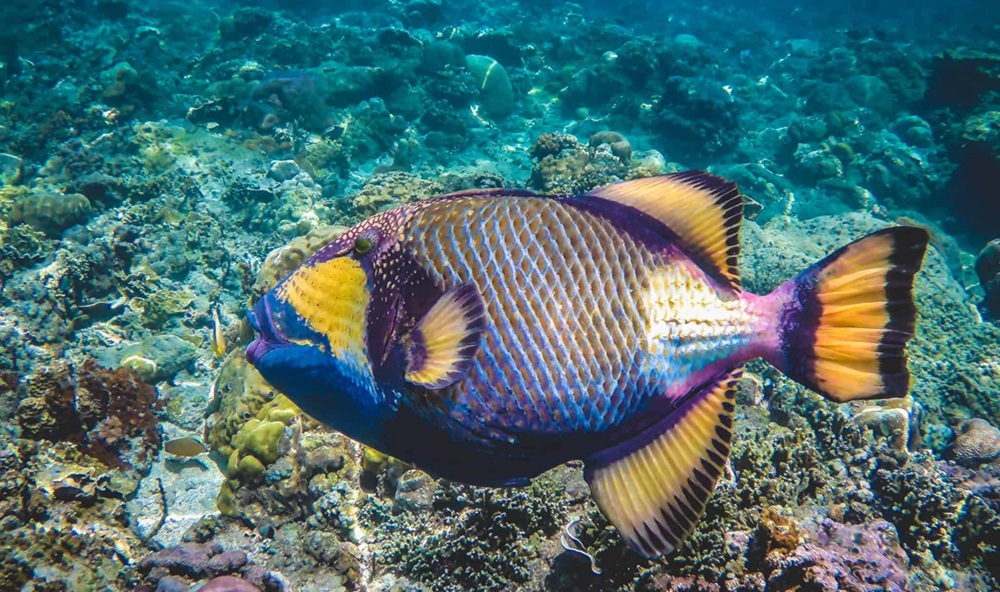
Triggerfish are another fascinating addition to the diverse Fish Species in Amed. Known for their bold personalities and strong jaws, these fish often investigate divers from a safe distance.
Most species are harmless when left undisturbed, but during nesting season they may become protective of their eggs. This is why it’s always important to follow your dive guide’s instructions and maintain a respectful distance from any nesting area.
Their unique body shape, vibrant colors, and confident swimming style make triggerfish one of the reef’s most recognizable inhabitants.
Lionfish: Beautiful but Best Admired from Afar
Few reef fish are as striking as the lionfish. Its flowing fins and dramatic stripes make it one of the most photographed Fish Species in Amed.
Although beautiful, lionfish possess venomous spines used strictly for defense. Divers should never attempt to touch or corner them. Fortunately, lionfish are generally slow-moving and prefer to remain hidden among coral ledges or rocky crevices during the day.
Watching one hover gracefully over the reef is an unforgettable underwater experience.
Gobies and Cleaner Fish
Some of the smallest Fish Species in Amed play surprisingly important ecological roles.
Gobies often live near sandy bottoms or inside small burrows, while cleaner wrasses establish “cleaning stations” where larger fish voluntarily stop to have parasites removed from their bodies.
Observing this natural cooperation is one of the most fascinating examples of life on a coral reef. These interactions demonstrate how every species, regardless of size, contributes to the health of the marine environment.
Seasonal Fish Sightings
Although reef fish can be seen throughout the year, seasonal conditions sometimes influence the abundance and activity of certain species.
Changes in water temperature, ocean currents, and food availability may attract larger schools or increase the visibility of juvenile fish. Every dive therefore offers something different, even for visitors returning to the same dive site.
This variety is one reason photographers and marine enthusiasts continue exploring Amed year after year.
Best Dive Sites for Fish Watching
Several dive sites around Amed are especially well known for their impressive fish populations.
Popular locations include:
- Jemeluk Bay
- Coral Garden
- Pyramid Reef
- Amed Wall
- Japanese Shipwreck
Each site supports different underwater habitats, allowing divers to encounter a wide range of Fish Species in Amed, from colorful reef fish hiding among coral branches to larger schools swimming through open water.
Protecting Amed’s Marine Ecosystem
The incredible diversity of fish found in Amed depends on healthy coral reefs and responsible tourism.
Divers can help protect these ecosystems by:
- Maintaining good buoyancy.
- Avoiding contact with coral.
- Never feeding marine life.
- Keeping a respectful distance from wildlife.
- Collecting any litter encountered during a dive if it is safe to do so.
- Choosing environmentally responsible dive operators.
Simple actions practiced by every diver contribute to preserving Amed’s underwater biodiversity for future generations.
The remarkable variety of Fish Species in Amed is one of the many reasons this peaceful corner of Bali has earned an outstanding reputation among divers worldwide. From brilliantly colored butterflyfish and angelfish to hardworking parrotfish, elegant bannerfish, curious triggerfish, and tiny cleaner fish, every dive introduces a new chapter of the reef’s vibrant ecosystem.
Whether you’re enjoying a beginner dive, earning your scuba certification, or returning as an experienced underwater explorer, the fish communities surrounding Amed offer endless opportunities for discovery. Combined with healthy coral reefs, excellent visibility, and calm conditions, these underwater habitats create memorable experiences throughout the year.
If you’re searching for an authentic diving destination where marine biodiversity meets relaxed coastal charm, exploring the Fish Species in Amed should be at the top of your diving itinerary.